
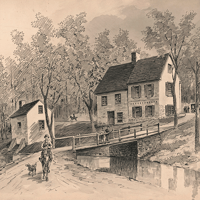


In this milestone 250th year for the United States, it’s important to remember that when you put ink on paper, you’re participating in a tradition as old as the country itself. Long before modern mills and premium sheets, the American papermaking story started in a small valley outside Philadelphia, at William Rittenhouse’s mill.
A premium sheet with history
Accent® Opaque is engineered for today’s most demanding print environments, from offset to digital, but it’s guided by a distinctly heritage mindset: Paper should feel good in the hand, perform reliably on press and support the messages that matter most. Its opacity, brightness and consistent runnability make it a go-to choice for bold visuals and fine type.
That commitment to craft doesn’t exist in a vacuum. It reflects Sylvamo’s long history in papermaking, including the legacy inherited from International Paper and the generations of mill workers, engineers and operators who have refined the art and science of making paper over time.
The first mills in America
Sylvamo’s mills, including the long-standing Ticonderoga Mill in New York, operate in a tradition established when papermaking first took hold in North America. The same foundational idea runs through both eras: put down roots in a community, harness local resources responsibly and invest in people and technology to make better paper year after year.
That story starts at William Rittenhouse’s mill in what is now Historic Rittenhouse Town in Philadelphia. In the late 1600s, Rittenhouse, a German-Dutch immigrant trained in European papermaking, partnered with printer William Bradford and built the first paper mill in British North America along a small waterway called Paper Mill Run. Their collaboration created the colonies’ first reliable local source of paper and set in motion an industry that would eventually span the country.
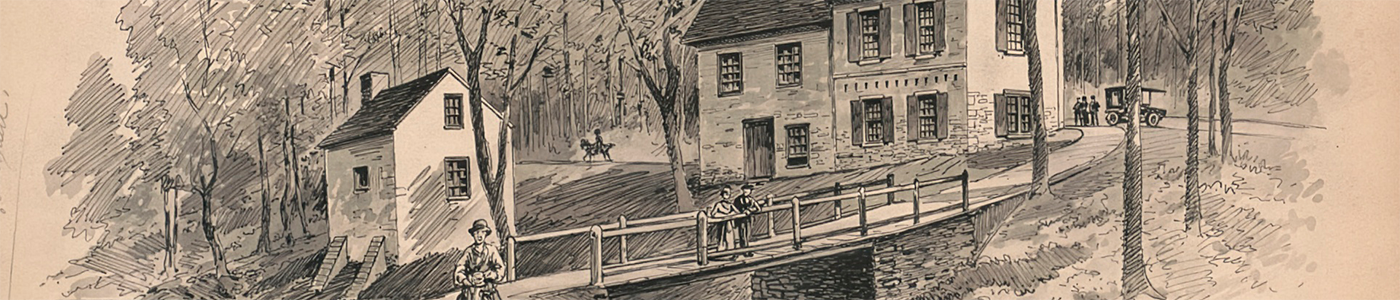 Taylor, F. H. (1922) Park com. / Frank H. Taylor. Wissahickon Creek Pennsylvania Philadelphia, 1922. [Place not identified: Publisher not identified] [Photograph] Retrieved from the Library of Congress, https://www.loc.gov/item/2016649155/
The paper behind the revolution
When the Rittenhouse mill began turning linen rags into handmade sheets, paper in the colonies shifted from an imported luxury to an accessible local resource. Colonists collected worn linen, which the mill’s workers transformed it into pulp using water-powered stamping hammers. Then, skilled papermakers pulled and formed each sheet by hand. The result was a sturdy, high-quality paper suited to books, pamphlets, newspapers and legal documents.
That local supply helped fuel the growing world of colonial print. Printers relied on Rittenhouse paper for everything from religious tracts to commercial forms and — as tensions with Britain rose — broadsides and pamphlets that circulated revolutionary ideas. As we approach the 250th anniversary of the U.S., it’s interesting to see how much of the early American story was literally written on paper born from that first mill.
Ticonderoga and the modern mill community
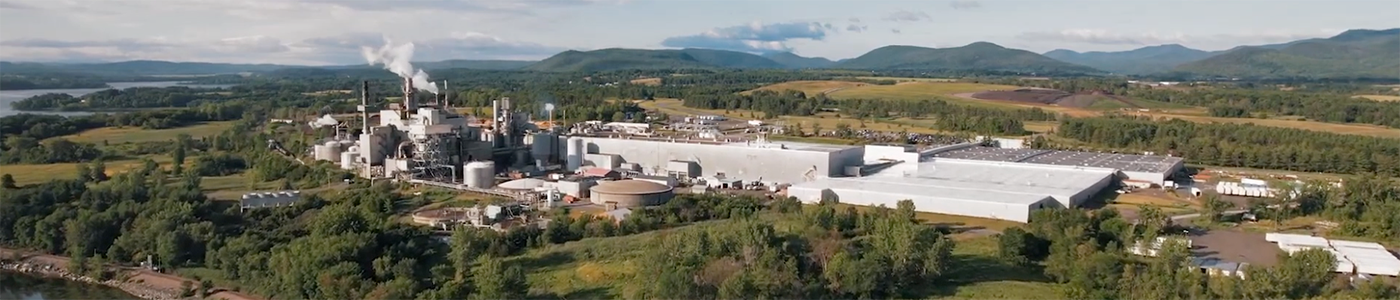
Fast-forward a few centuries, and Sylvamo’s Ticonderoga Mill reflects how far the industry has come, while still echoing those early roots. Located in a region with its own long papermaking history, Ticonderoga has been an anchor for the surrounding community for generations, providing skilled jobs, supporting local businesses and continually investing in technology, safety and sustainability.
Where Rittenhouse relied on linen rags and wooden waterwheels, a modern facility like Ticonderoga uses advanced pulping, precision-controlled papermaking machines and robust environmental systems to create high-performing papers like Accent. But the core principles are still the same—thoughtful sourcing, deep process expertise and a commitment to making a sheet printers can trust.
Accent Opaque and America’s 250th anniversary
As the country prepares to celebrate its 250th anniversary, Accent Opaque is uniquely positioned to help brands and institutions tell their stories on a sheet that matches the moment. Invitations, commemorative publications, museum catalogs, reports and projects for anniversary events all demand a paper that looks refined, feels substantial and runs consistently, which is where we excel.
The nation’s earliest print deliverables were set in type and pulled on paper made at mills like Rittenhouse’s. Today, communications marking 250 years of that history can run on Accent, a modern uncoated sheet whose lineage flows through Sylvamo’s mills back to that first, water-powered operation in Pennsylvania. The tools and technologies have evolved, but the purpose to give important ideas a beautiful, dependable surface to live on remains the same.
Accent Opaque is more than a product specification; it’s a tangible expression of the papermaking craft that has helped shape American life. Printers and brands can align themselves with a story that stretches from Paper Mill Run to modern mills like Ticonderoga through Sylvamo’s long heritage and into the future of print.
Ready to start your next project? Reach out to us today.